Completed — 1972
Apollo 16
Highland Explorer
Apr 16 — Apr 27, 1972
11 days, 1 hour, 51 minutes
Apollo 16 Trajectory Replay — Top View
Pre-Launch
Day 0 of 25
11d 1h 51m
Mission Duration
~248,000mi
Max Distance from Earth
71hrs
Time on Lunar Surface
3 EVAs
20h 14m Total EVA Time
211lbs
Lunar Samples Collected
22.2mi
Lunar Rover Distance
Apr 16, 1972
Launch — 12:54 PM EST
Apr 27, 1972
Splashdown — 2:45 PM EST
USS Ticonderoga
Recovery — South Pacific
Mission Summary
Apollo 16 was NASA's fifth crewed Moon landing and the first mission to explore the lunar highlands. Launched on April 16, 1972, it carried Commander John Young (on his fourth spaceflight and second trip to the Moon), Command Module Pilot Ken Mattingly, and Lunar Module Pilot Charlie Duke.
The crew landed in the Descartes Highlands, a region scientists believed was formed by volcanic activity. Over three days and three EVAs totaling 20 hours and 14 minutes, Young and Duke drove the Lunar Rover 16.6 miles across the highland terrain, collecting 211 pounds of samples including “Big Muley” — the largest rock returned by any Apollo mission (26 lbs).
The geological findings surprised scientists: rather than volcanic rocks, the samples were primarily impact breccias, reshaping understanding of the Moon's highland formation. Mattingly conducted groundbreaking orbital science from the Command Module Casper, and during the return trip performed a deep-space EVA at 173,000 miles from Earth to retrieve film canisters from the service module.
Apollo 16 splashed down on April 27, 1972, in the South Pacific and was recovered by the USS Ticonderoga. The mission demonstrated that the lunar highlands held crucial clues to the Moon's ancient history and proved that crews could safely operate the Lunar Rover in rugged highland terrain.
The crew landed in the Descartes Highlands, a region scientists believed was formed by volcanic activity. Over three days and three EVAs totaling 20 hours and 14 minutes, Young and Duke drove the Lunar Rover 16.6 miles across the highland terrain, collecting 211 pounds of samples including “Big Muley” — the largest rock returned by any Apollo mission (26 lbs).
The geological findings surprised scientists: rather than volcanic rocks, the samples were primarily impact breccias, reshaping understanding of the Moon's highland formation. Mattingly conducted groundbreaking orbital science from the Command Module Casper, and during the return trip performed a deep-space EVA at 173,000 miles from Earth to retrieve film canisters from the service module.
Apollo 16 splashed down on April 27, 1972, in the South Pacific and was recovered by the USS Ticonderoga. The mission demonstrated that the lunar highlands held crucial clues to the Moon's ancient history and proved that crews could safely operate the Lunar Rover in rugged highland terrain.
NASA Mission Overview
Mission Timeline
Mission Complete
Mission Gallery
Crew
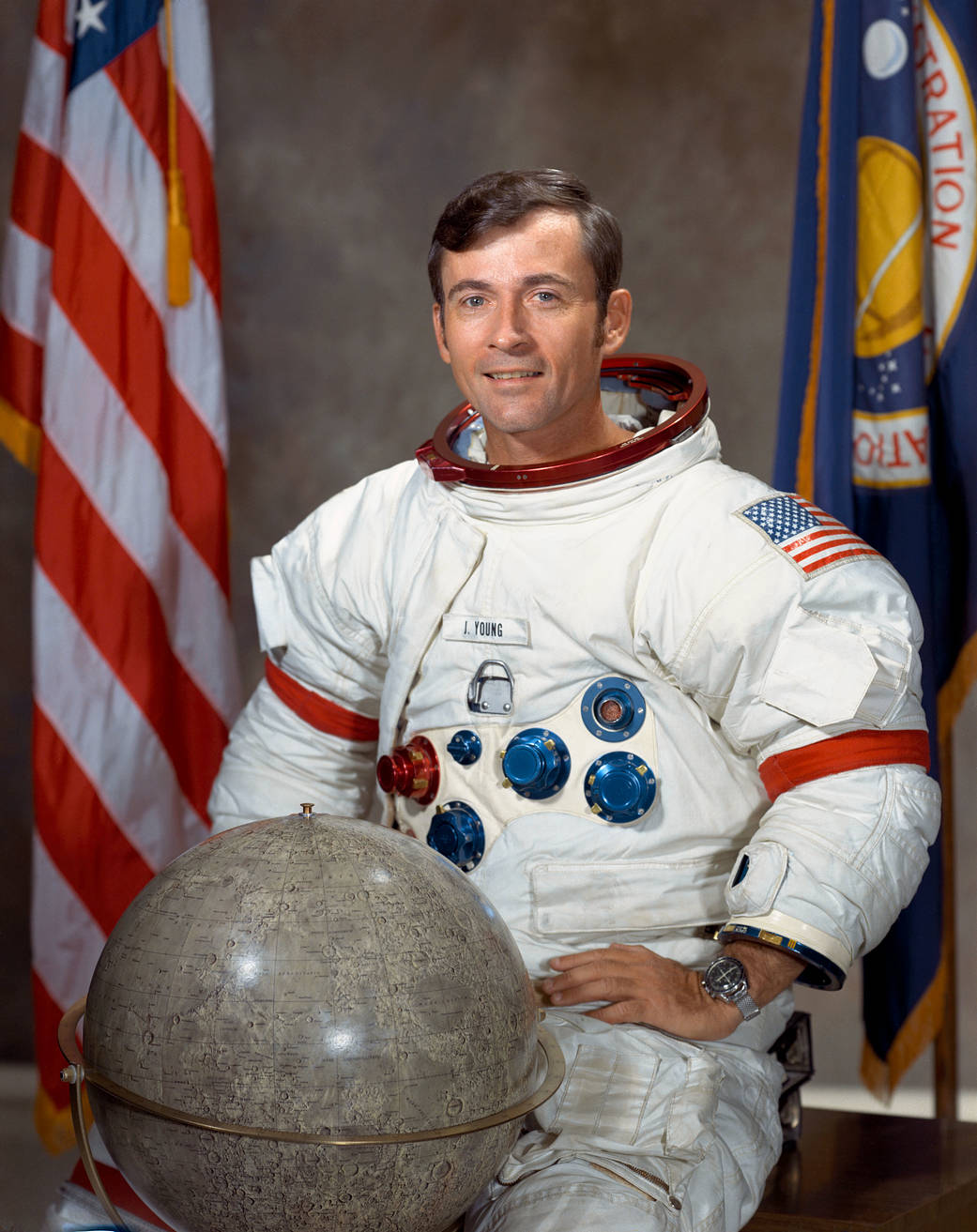
John Young
Commander
4th spaceflight, 2nd trip to the Moon

Ken Mattingly
Command Module Pilot
Deep-space EVA at 173,000 mi from Earth

Charlie Duke
Lunar Module Pilot
Youngest person to walk on the Moon (36)