Completed — 1971
Apollo 15
The First Extended Lunar Exploration
Jul 26 — Aug 7, 1971
12 days, 17 hours, 12 minutes
Apollo 15 Trajectory Replay — Top View
Pre-Launch
Day 0 of 12
12d 17h 12m
Mission Duration
~248,000mi
Max Distance from Earth
67hrs
Time on Lunar Surface
3 EVAs
18 Hours 33 Min Total EVA Time
170lbs
Lunar Samples Collected
17.3mi
Lunar Rover Distance
Jul 26, 1971
Launch — 9:34 AM EDT
Aug 7, 1971
Splashdown — 4:45 PM EDT
USS Okinawa
Recovery — North Pacific
Mission Summary
Apollo 15 was the ninth crewed Apollo mission and the fourth to land on the Moon. Launched on July 26, 1971, it marked a turning point in lunar exploration as the first “J mission” — an extended scientific expedition designed for longer stays, greater mobility, and deeper investigation of the lunar surface. The crew consisted of Commander David Scott, Command Module Pilot Alfred Worden, and Lunar Module Pilot James Irwin.
The mission targeted the Hadley-Apennine region, one of the most geologically dramatic landing sites of the Apollo program. Nestled at the base of the Apennine Mountains and along the edge of Hadley Rille — a sinuous channel over a mile wide — the site promised extraordinary scientific returns. Apollo 15 debuted the Lunar Roving Vehicle (LRV), giving astronauts the ability to travel far beyond walking distance for the first time. Scott and Irwin drove the rover 17.3 miles across the lunar surface over three EVAs totaling 18 hours and 33 minutes, collecting 170 pounds of samples.
Among the mission’s most celebrated moments was the discovery of the “Genesis Rock” (sample 15415), a 4-billion-year-old anorthosite believed to be a piece of the Moon’s original crust. Scott also performed Galileo’s famous experiment on live television, dropping a hammer and a falcon feather simultaneously to demonstrate that objects fall at the same rate in a vacuum. During the return trip, Alfred Worden conducted one of the most remote spacewalks in history, retrieving film cassettes from the Scientific Instrument Module bay during a deep-space EVA.
Apollo 15 also deployed the first lunar subsatellite, left in orbit to study the Moon’s gravity field and plasma environment. The crew splashed down in the North Pacific on August 7, 1971, and was recovered by the USS Okinawa. The mission fundamentally expanded the scope of what could be achieved on the lunar surface and set the template for the final two Apollo landings.
The mission targeted the Hadley-Apennine region, one of the most geologically dramatic landing sites of the Apollo program. Nestled at the base of the Apennine Mountains and along the edge of Hadley Rille — a sinuous channel over a mile wide — the site promised extraordinary scientific returns. Apollo 15 debuted the Lunar Roving Vehicle (LRV), giving astronauts the ability to travel far beyond walking distance for the first time. Scott and Irwin drove the rover 17.3 miles across the lunar surface over three EVAs totaling 18 hours and 33 minutes, collecting 170 pounds of samples.
Among the mission’s most celebrated moments was the discovery of the “Genesis Rock” (sample 15415), a 4-billion-year-old anorthosite believed to be a piece of the Moon’s original crust. Scott also performed Galileo’s famous experiment on live television, dropping a hammer and a falcon feather simultaneously to demonstrate that objects fall at the same rate in a vacuum. During the return trip, Alfred Worden conducted one of the most remote spacewalks in history, retrieving film cassettes from the Scientific Instrument Module bay during a deep-space EVA.
Apollo 15 also deployed the first lunar subsatellite, left in orbit to study the Moon’s gravity field and plasma environment. The crew splashed down in the North Pacific on August 7, 1971, and was recovered by the USS Okinawa. The mission fundamentally expanded the scope of what could be achieved on the lunar surface and set the template for the final two Apollo landings.
NASA Mission Overview
Mission Timeline
Mission Complete
Mission Gallery
Crew

David Scott
Commander
First to drive the Lunar Rover
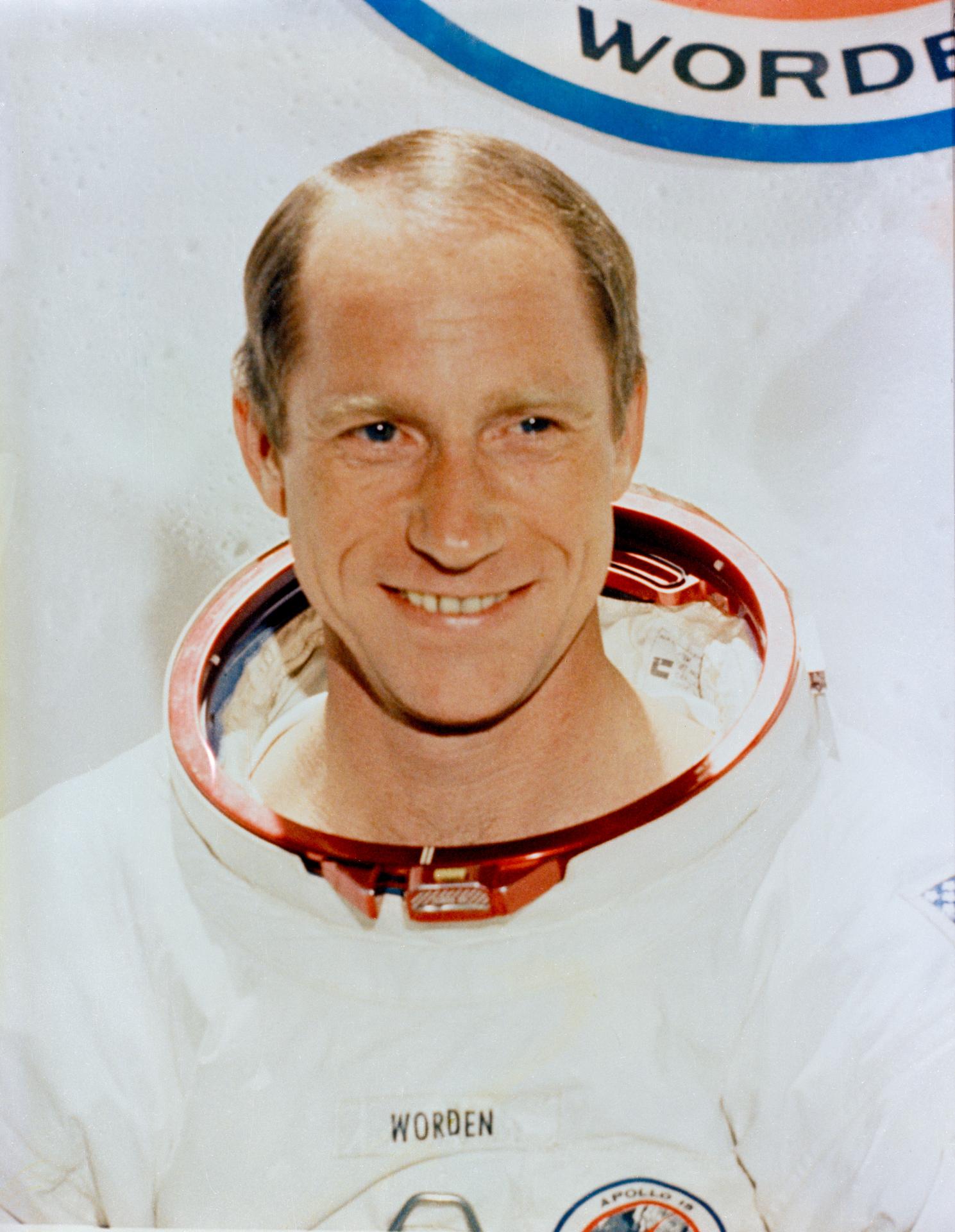
Alfred Worden
Command Module Pilot
Performed deep-space EVA on return trip
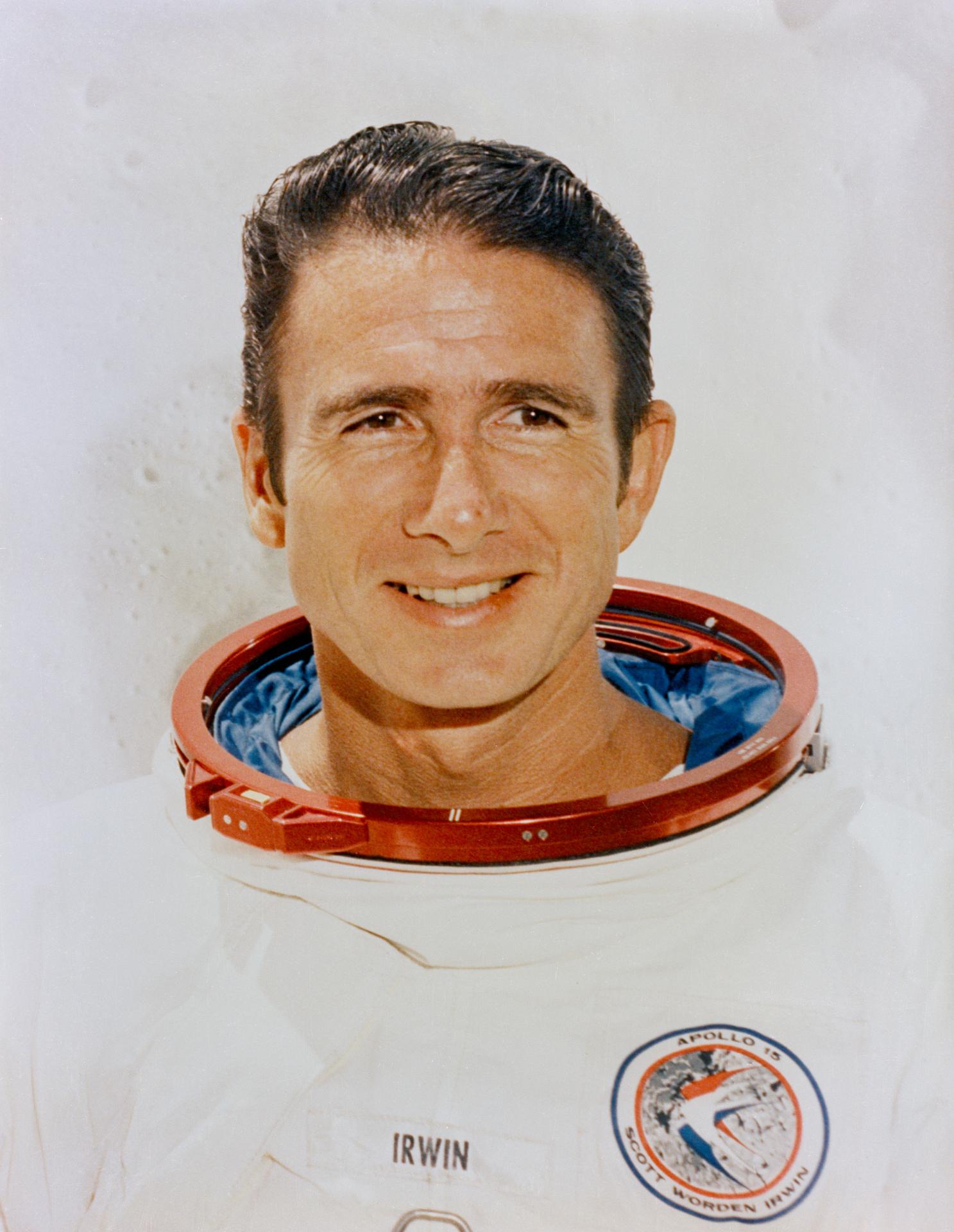
James Irwin
Lunar Module Pilot
Discovered the Genesis Rock